Disability Superpowers and Making Arbor Day Happen
Science Update for April 23, 2026

Dear Science Update F&F:
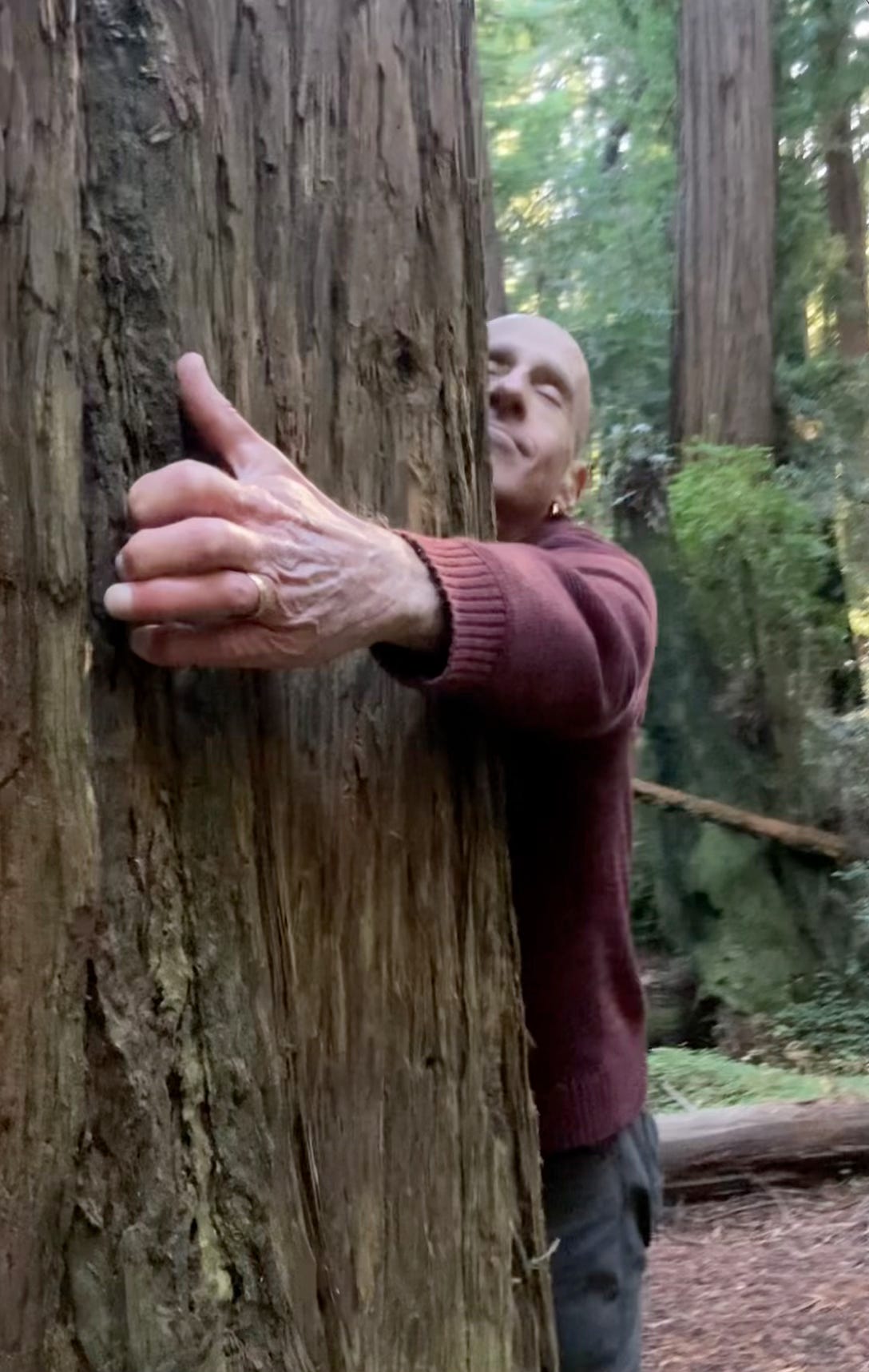
How has the Retail Store/Greeting Card Industrial Complex not discovered Arbor Day? Christians, Jews, Muslims, Buddhists, Hindus, atheists– everyone loves trees. Sierra Club and Weyerhauser both love trees. Indigenous people love trees. Immigrants love trees. Nowadays, even petrochemical companies tout tree-planting campaigns.
And yet tonight, what children will be trimming their Arbor Day Tree with care, in hopes that soon old Groot (*brought to you by Disney/Marvel Studios) will appear, bringing tasty nuts, fruit, and maybe a wheelbarrow full of compost? Where is the live national coverage of the annual Arbor Day Parade in Nebraska City, Nebraska, birthplace of Arbor Day? Where are the Hallmark Channel movies and Arbor Day tree displays in Macy’s department store windows?
This looks to me like the perfect opportunity for a noble but doomed campaign to make Arbor Day happen.
And that doomed campaign starts right here!
Forget about contacting your representatives. The nice lobbyists who work for Disney, Apple and Hallmark will do that for you once this baby is sufficiently monetized. Instead, write to Disney, demanding an Arbor Day campaign, with Grootcentric prequels and sequels, coupled with forest-themed red-carpet events:
General Fan Mail & Studio Address:
The Walt Disney Company
500 South Buena Vista Street
Burbank, CA 91521
Open with Dear Josh D’Amaro, brand new CEO of Walt Disney:
Character Fan Mail (Walt Disney World):
Attn: [Character Name]
c/o Walt Disney World Communications
P.O. Box 10040
Lake Buena Vista, Florida 32830-0040
Open with Dear Groot:
There Are No Apples Without Apple Trees
And how about John Ternus, the new CEO of Apple? He’s reputed to be a nice guy and also ambitious enough to want to make his mark. And who wouldn’t be proud to own a fine wood-grain iPhone, made with sustainable lumber, pre-loaded with eco-apps, and truly recyclable? Apple says they read all product feedback carefully. Write to:
https://www.apple.com/feedback/iphone/
There Are No Greeting Cards Without Trees
And of course, we can’t forget Hallmark Cards. Write to CEO Mike Perry at:
https://www.care.hallmark.com/s/
Is this a long shot? Sure. But let us take our inspiration from the tiny seedling that manages to push its way through impervious pavement. As Groot tells us:
“Only You Can Save Arbor Day from Being a Neglected, Second-Rate Holiday”
National Forest Service to Save Trees from Wildlife Abuse
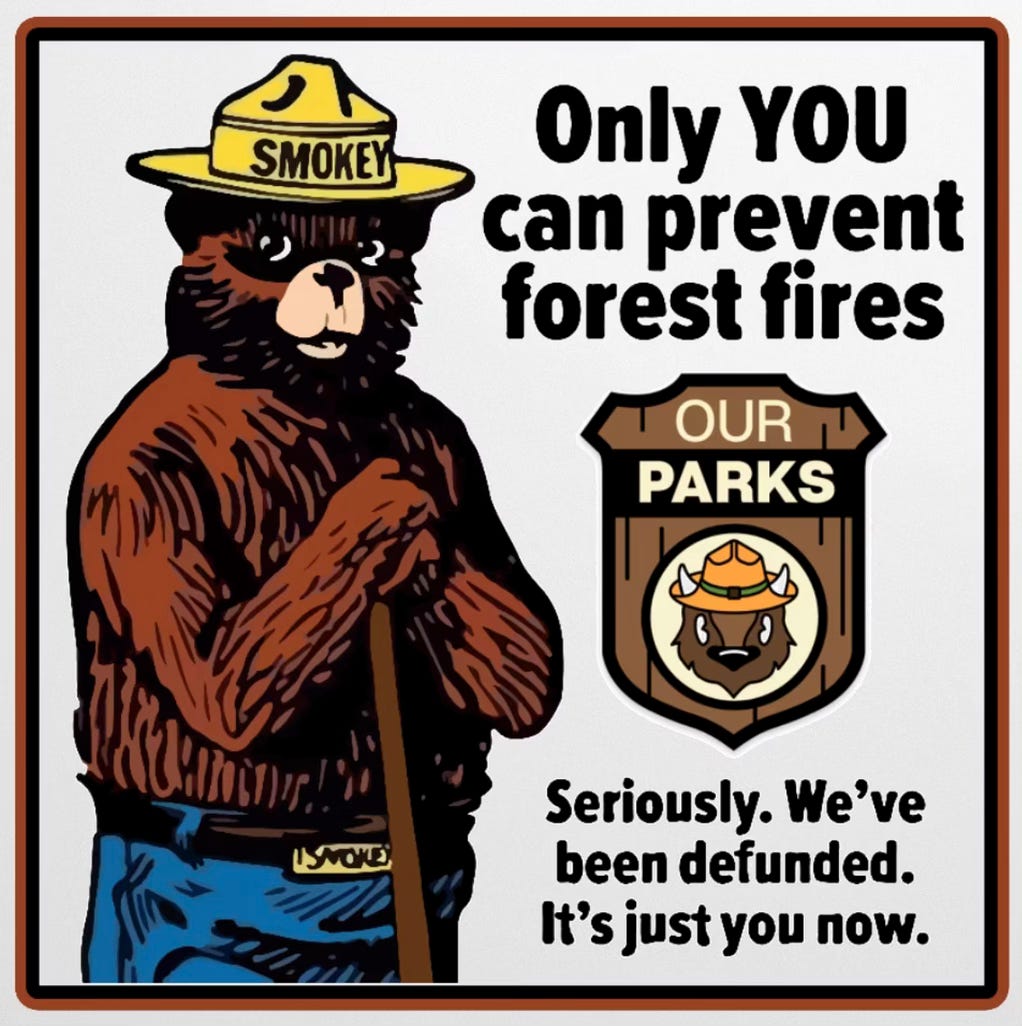
With an impeccable sense of timing, the Trump administration chose the week before Arbor Day to announce their restructuring/dismantling of the National Forest Service, with an eye toward protecting trees from the assaults of wild creatures (who aim to climb them, poke holes in them, scratch their backs against them and even poop on them) by removing trees from forests and turning them into wood products, where they will be safe. The initiative will also liberate National Forest Service staff from their jobs, freeing them to apply for more meaningful work in the fast-paced world of data center management.
April 23: Today, Yesterday
The First YouTube Video
On April 23rd, 2005, YouTube co-founder Jawad Karim posted the first YouTube video, titled “Me at the Zoo.” It consisted of Karim standing in front of some elephants at the San Diego Zoo. He noted that the elephants had very long trunks and were very cool, thus setting the high bar for thoughtful, erudite commentary that remains the hallmark of YouTube today.
To Be and Also Not To Be
On this day, April 23, William Shakespeare was born (1565) and died (1616).
Every Day is Something Day, Pallas’s Cat Edition
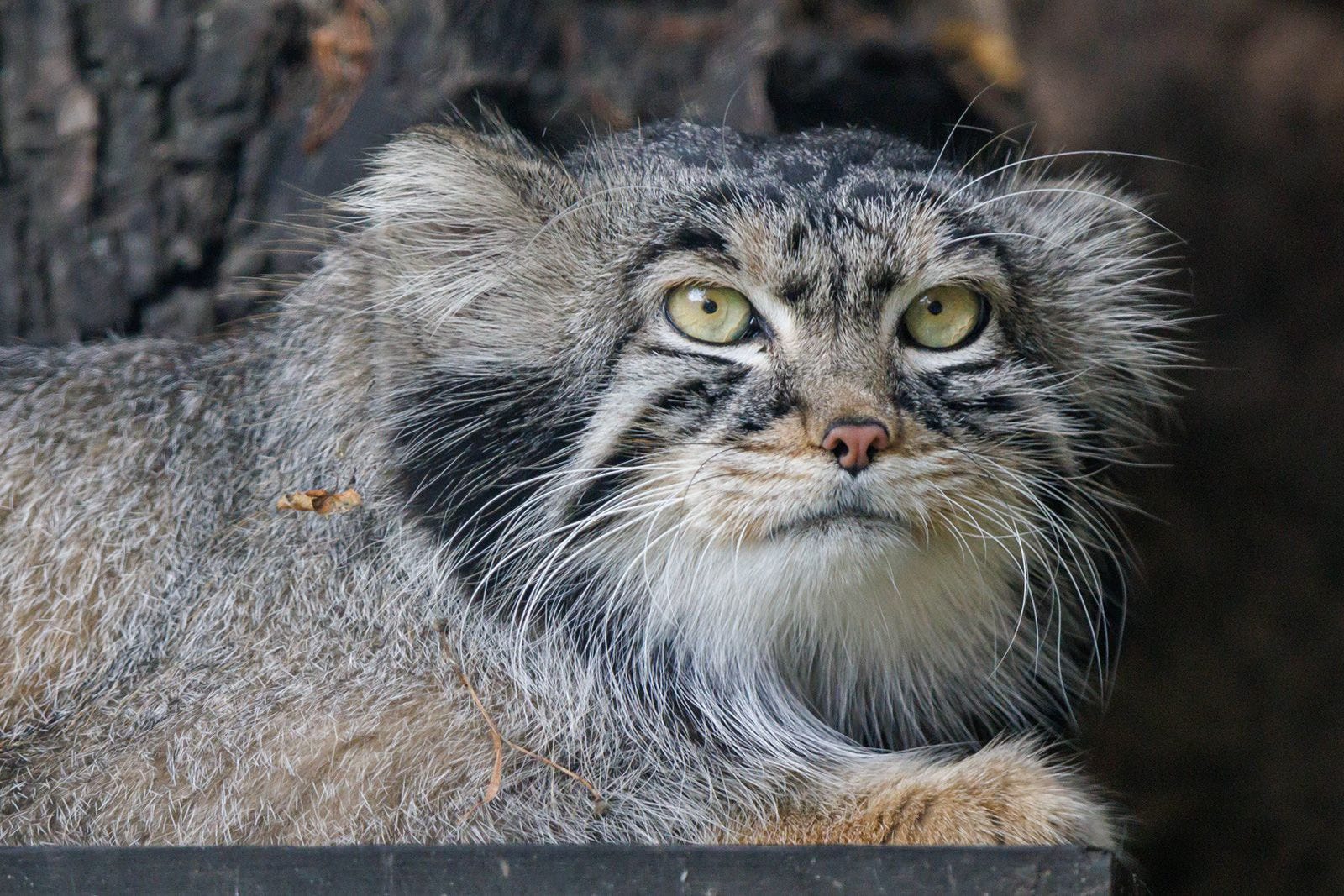
Today is International Pallas’s Cat Day, celebrating a rotund, small-eared feline native to the Asian steppe. And while they look so soft and pudgy that you just want to pick one up and squoosh it, they apparently don’t care for that.
That’s All, Folks!
That’s it for April 23, but for April 25, there’s National Go Birding Day
And for April 28, there’s Save the Frogs Day
Breaking News
April 23, 2026, 2:00 PM
The Seeds Have Ears (Scientific Reports)
Finally, a definitive answer to the question “If a tree falls in the forest and no one hears it, did it really fall?” The answer is “Yes, because seeds– which are presumably present wherever trees are– hear them fall, even if there are no people around.”
Wait, seeds can hear?
Yes, according to Nicholas Makras and colleagues who report that seeds hear the vibrations of falling raindrops, and that the sound stimulates them to start growing. Seeds have little stones down at their root-sprouting end (for which we’ll use the technical term “bum”) and these stones help them settle into the soil bum-side down. The scientists believe that it is the vibration of these little stones that lets the seeds sense and respond to vibrations in their environment.
Octopi of Unusual Size (Science magazine)
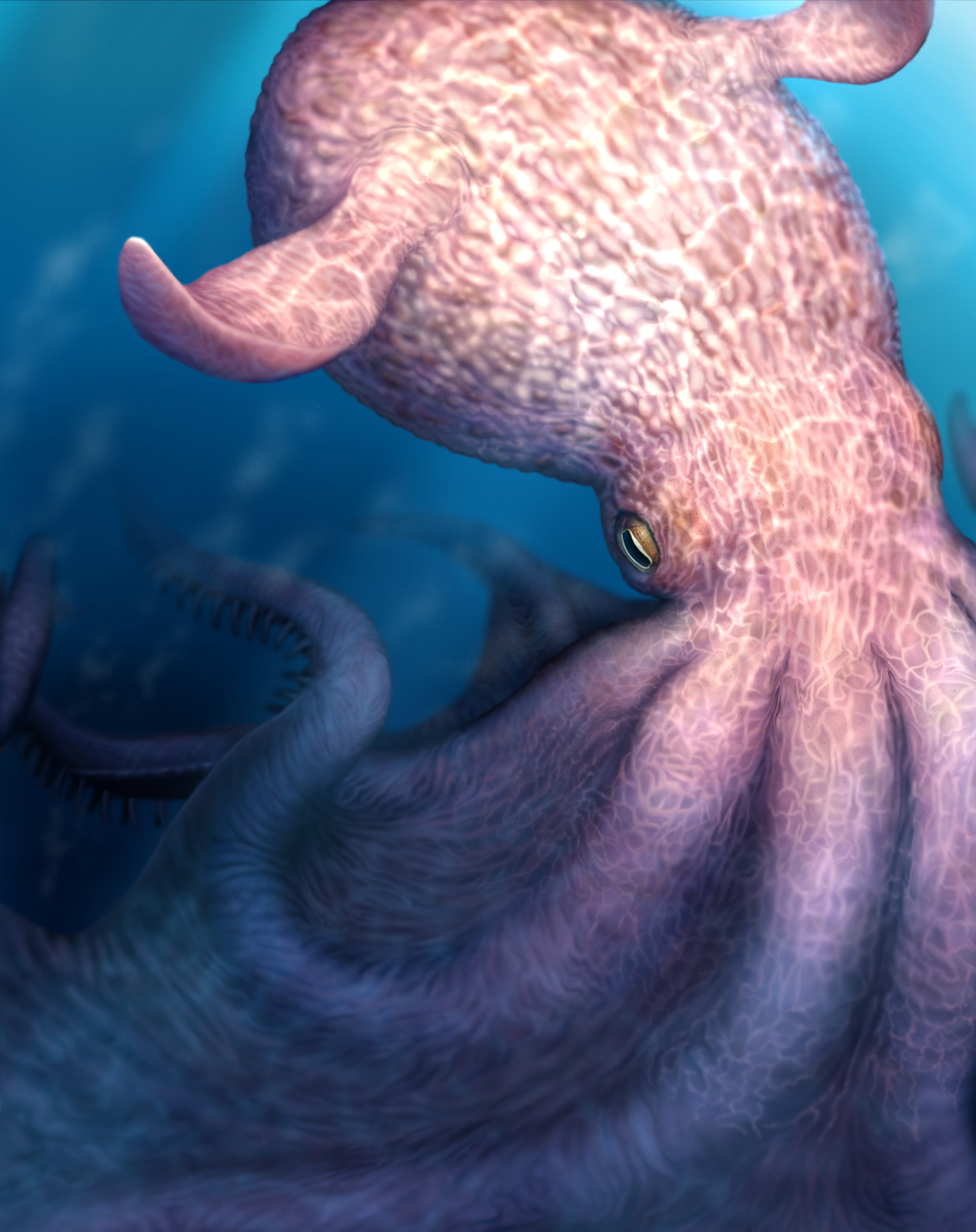
Today we can be thankful that the oceans we swim in don’t harbor enormous carnivorous mosasaurs and megalodon sharks the way they did in the late Cretaceous Period. On the other hand, back then we wouldn’t have had to worry about deadly SeaDoos operated by drunken yahoos. Things have a way of evening out. In any case, scientists now report on another large prehistoric ocean beast that you no longer need to worry about: a 19-meter long octopus with a taste for vertebrates.
In the journal Science, Shin Ikegami and colleagues describe fossil evidence of the enormous octopi (or octopuses, if you prefer). In addition, they analyzed the octopi’s (or octopuses’s) beaks and claim that the beaks’ wear marks suggest that they (the octopuses, not the scientists) gnawed on bones. In other words, instead of sticking with their own phylum, they ate members of ours. I know, it’s hard to believe that they can draw that conclusion merely by examining beak fossils, but I am not an octopologist and neither are you.
Springy Knots (Science magazine)
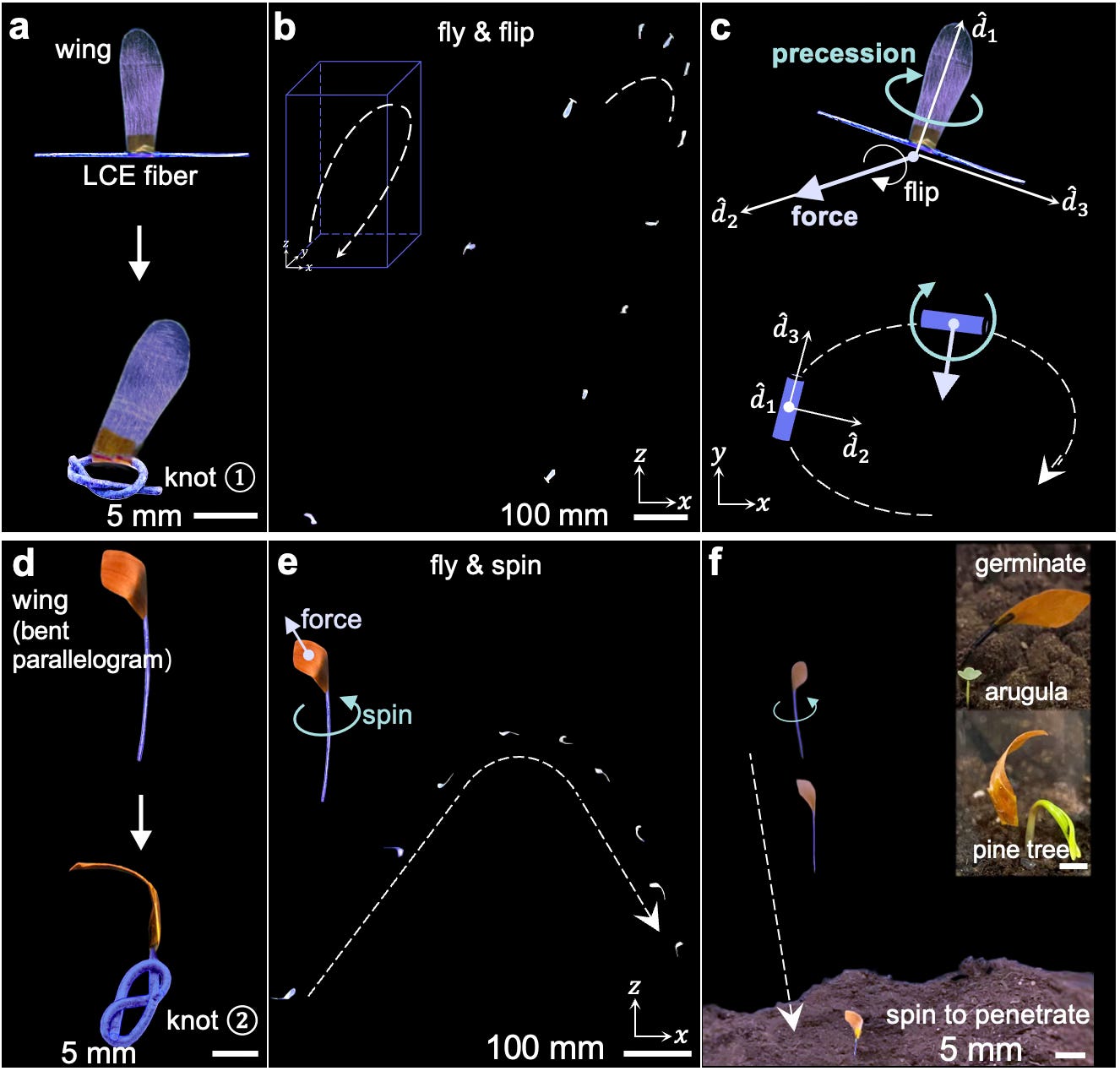
It’s easy to forgive sailors and Boy Scouts for focusing on knots that tie things tightly and for ignoring knots that sproing open if you just look at them wrong. But it’s those “touch me not” knots that are the focus of today’s coolest science report, from University of Pennsylvania material scientist Yaoye Hong and colleagues, writing in the journal Science. The team ties elastic fibers into knots that, when heated, spring open and perform “flipping, spinning and sequential gymnastic in-air motions.”
Significantly, the selection of fiber and the topology of the knot allow them to create materials that perform the exact same leaps and pirouettes time after time. Or, as they put it:
“We have designed insect-scale aerial soft actuators capable of leaping and flying by programming the untying process through coupling the knot geometry, topology, and highly elastic but flexible LCE-Kevlar composite fibers with directed intrinsic molecular anisotropy.”
They also added tiny wings to shape the flight patterns of the objects once they’re airborne. They envision the technology being used to allow tiny robots to explode into the air and fly in predictable patterns once they’re airborne.
Plucky Parrot (Current Biology)
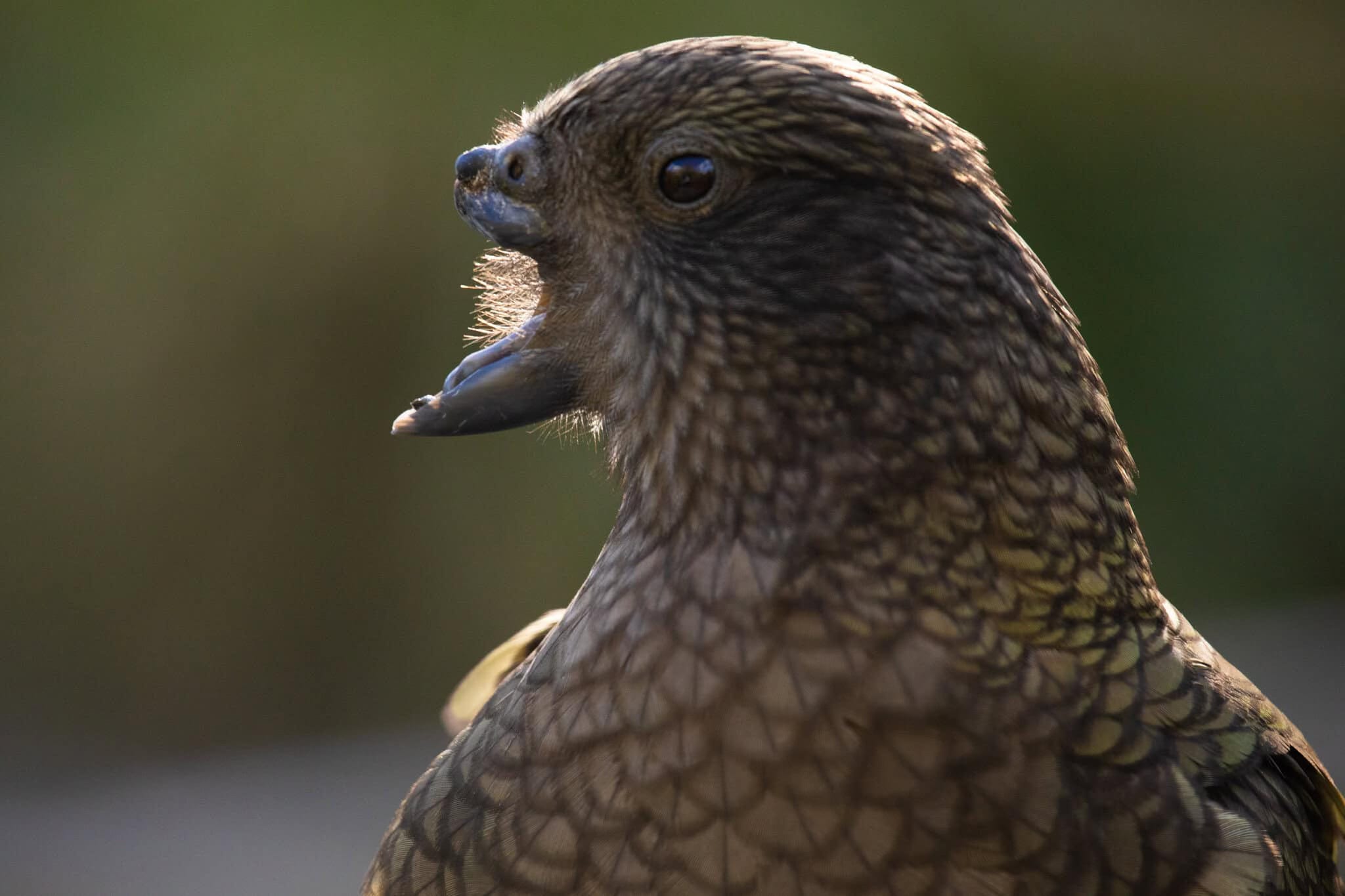
It was hard to escape the feel-good science feature of the week: a parrot named Bruce with a devastating deformity– a missing upper beak– became the alpha male of his small flock.
No self-respecting science reporter would use that story as a segue into how people with disabilities are often underestimated, and how their differences can be their superpowers. I, on the other hand, am happy to do exactly that.
First, the original story, from the April 20th issue of Current Biology:
Male kea parrots fight for dominance, generally subduing their rivals by biting down on their necks. Lacking an upper beak, Bruce would seem to be a helpless opponent. But the missing upper beak exposed Bruce’s pointy lower beak, which he used to poke his opponents into submission. As a result, Bruce is the undisputed alpha male of the group: the other birds let Bruce eat his fill at all of the feeding stations. When he’s done, subservient males come and clean his lower beak for him.
Disability or Superpower?
The surprising success of Bruce immediately made me think of how disabilities can unlock superpowers in people. At the American Association for the Advancement of Science (AAAS), I was lucky enough to meet, report on and sometimes work with scientists and engineers whose extraordinary achievements resulted not in spite of, but because of their disabilities.
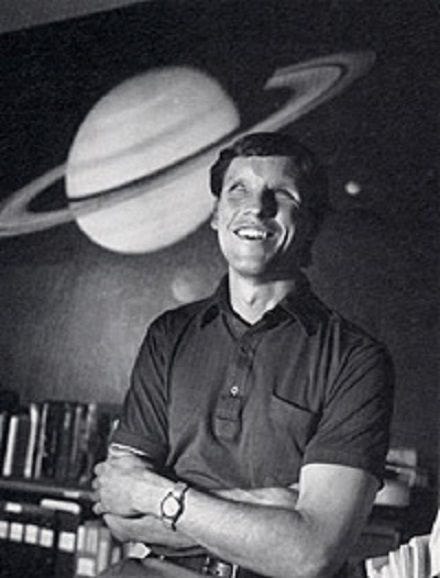
Astronomer Kent Cullers, blind from birth, relied on his keen hearing to discern potential patterns in the data received by radio telescopes– patterns that could be the signature of intelligent life. Cullers eventually became director of the Search for Extraterrestrial Intelligence Phoenix project. He was fictionalized in the film Contact as “Kent Clark,” played by actor William Fichtner.
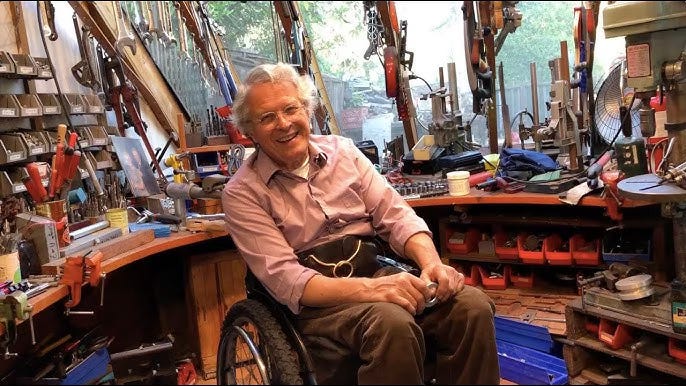
A motorcycle accident during his college years made Ralph Hotchkiss a paraplegic. His struggles with his hospital-suppled wheelchair led him to create the Center for Concerned Engineering and eventually Whirlwind Wheelchairs, dedicated to designing and building inexpensive rugged wheelchairs suitable for use in societies with rough conditions, and also Whirlwind Women, a consortium of businesses where women could earn a living and provide a public service, building and repairing wheelchairs in developing countries.
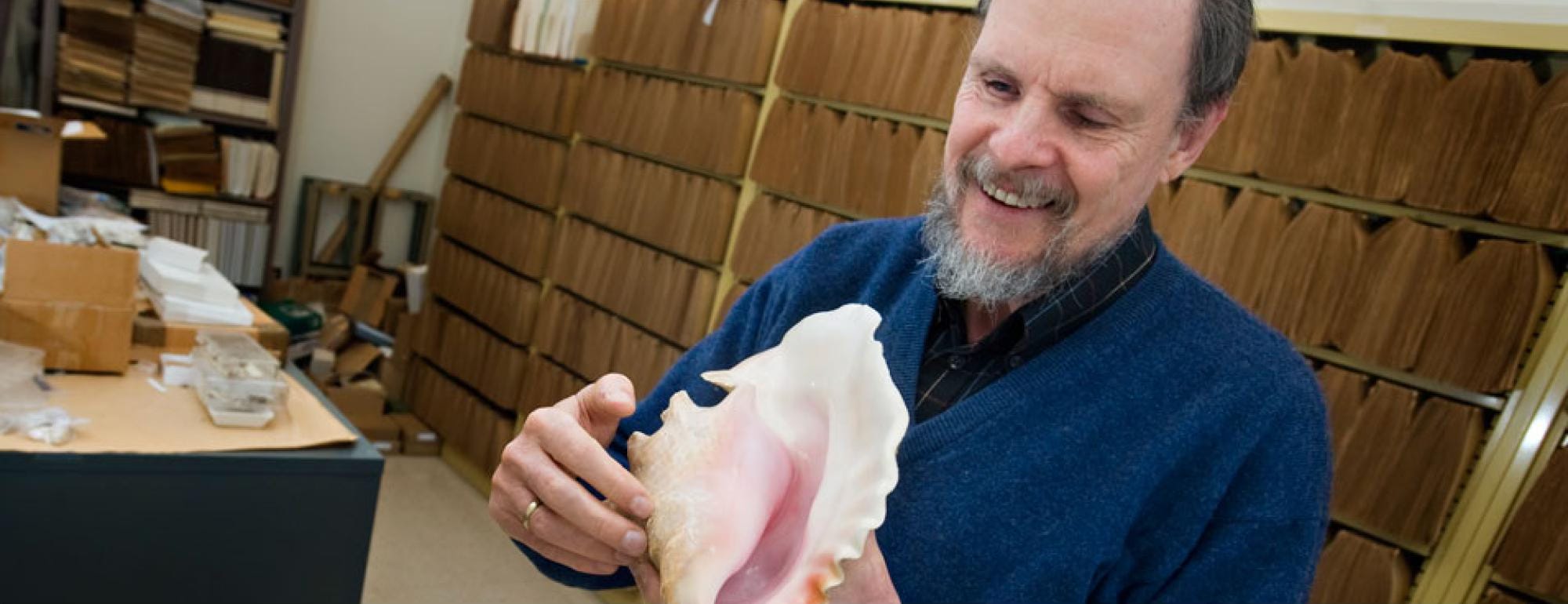
Geerat Vermeij lost his eyesight at the age of 3 and then used his extraordinary sense of touch to become a conchologist, studying mollusk shells. Vermeij discovered new species by feeling the topography of their shells, and pioneered insights into evolution that would never have occurred to a sighted scientist.
Even eminent biologist EO Wilson became the world’s leading ant expert as a result of a childhood fishing accident that damaged his eye and made him hopelessly nearsighted, derailing his ornithological ambitions.
And these are just the physical disabilities; there are countless more examples of neurodivergent people achieving success not in spite of but directly due to their differences.
But for every successful person with a difference, there are many who fail to achieve their potential because of the way others view them. At the American Association for the Advancement of Science (AAAS), Laureen Summers heads up the Entry Point project. She has cerebral palsy, but her biggest challenge is that funders, society and even sometimes AAAS itself views her and the project more as a charity than as an opportunity with vast, untapped potential—exactly like the many young people it tries valiantly to lift up.
Laureen Summers: My Crooked Path to Science
My Woman Crush Wednesday is Laureen Summers
Kinetic City Empower Project Publishes STEM Accessibility Research